It is the morning after the mehndi night. The bride washes off the dried paste, and the colour underneath is pale orange. The artist promised "dark maroon". The photographer arrives in two hours.
This happens more often than families expect, and it is rarely bad luck. Usually the artist was booked from a few pretty photos, nobody asked what was in the cone, and the timing left no room for the colour to develop.
Use this checklist to compare mehndi artists properly: their real work, their cones, their prices and how they fit into your wedding schedule.
Judging the portfolio
- Can I see photos of your own brides, taken on your phone? Many profiles mix in designs copied from Pinterest or other artists. Photos from the artist's own gallery, with dates and the same bride across several shots, are hard to fake.
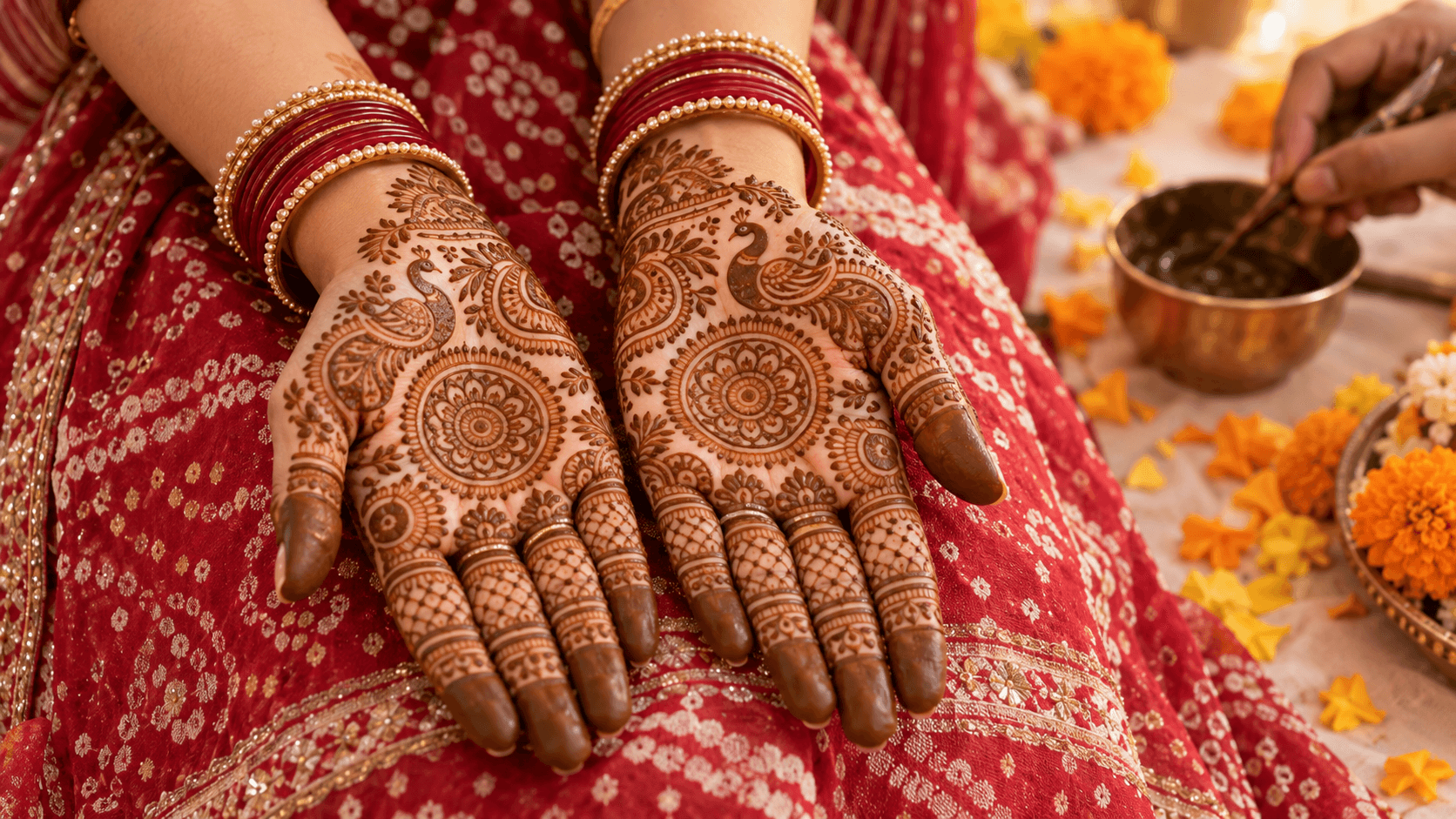
- Do you have pictures of the colour on day two? Fresh paste always looks neat and dark. What matters is the stain after the paste comes off and the colour has had a day or two to deepen. Ask for these photos, not just the paste shots.
- Can you do the style I want? Some artists are best at fine traditional patterns, some at Arabic (bold, open flowing patterns) or minimal modern work, and some at portraits of the couple or wedding scenes. Show your reference and ask if they have done something close to it before.
- Who will actually apply my mehndi? Bigger teams send juniors to busy weddings. Confirm by name that the main artist will do the bride's hands and feet.
The cone: natural or chemical
Natural henna stains orange first, then darkens to reddish brown over the next one to two days. It never goes jet black within an hour. Anything that does has something added.
- Do you make your own cones, and what is in them? A good answer names simple things: henna powder, water or lemon juice, sugar and an essential oil such as eucalyptus. Be careful with "instant dark", "no-wait" or black cones. Packaged chemical cones can contain added dyes and other irritants that cause rashes and burns.
- Will you avoid "black henna" completely? The US FDA warns that so-called black henna often contains PPD (para-phenylenediamine), a hair-dye chemical that is not meant for skin. Reactions can include blisters, weeping sores and scars that last longer than the design. Dermatology sources add that a PPD reaction often shows up days later, and it can make you allergic to hair dye for years.
- Can I do a patch test? Ask for a small dab of the same cone on your inner arm a few days before the wedding. Natural henna rarely causes allergies, but a patch test settles it. If the paste smells of kerosene or strong chemicals, say no.
Pricing and how many artists you need
- How do you charge for the bride? Bridal mehndi is usually a package for both hands and feet, and the price rises with how far up the arm and leg the design goes and how detailed it is. Ask exactly what the package covers: elbow or wrist, ankle or calf, front and back of hands.
- How do you charge for guests? Guest mehndi is usually priced per hand (often one side, a simpler design), per hour, or per artist for a fixed time slot. Get the same basis from every artist you compare, otherwise the quotes will not line up.
- How many guest hands can one of your artists finish in an hour? This is the number that tells you how many artists to book. Count roughly how many relatives and friends want mehndi, divide by what one artist can do in the hours you have, and add one extra artist if the list keeps growing, as it usually does.
- What is extra? Ask about travel, especially for an out-of-town venue or a farmhouse outside the city, plus food for the team, late-night charges and extra cones for the family to take home.
Put the final number into your wedding budget so it does not surprise you later.
Time and schedule
- How long will my bridal mehndi take? A full bridal design on hands and feet often takes four to six hours, and heavier designs take longer. You will sit still for all of it, so plan meals, breaks and a comfortable outfit.
- When should we schedule it? Many Gujarati families hold the mehndi a day or two before the wedding, often next to a sangeet or Garba night. Natural colour keeps deepening for 24 to 48 hours, so mehndi the night before the wedding leaves little room. Two days before is safer if you want peak colour on the wedding day.
- Will you do a trial? A short trial on one palm, a few weeks ahead, shows you the artist's hand, speed and colour on your skin. Some charge for it. It is worth it.
Aftercare for a dark colour
- What aftercare do you recommend? Good artists explain it without being asked. Common advice is to keep the paste on for several hours or overnight, dab on a lemon and sugar mix so it stays on the skin, scrape the paste off instead of washing it, and keep water away for many hours after.
- Can you leave instructions with my family? The bride will be busy. A written note with the aftercare steps helps whoever is looking after her.
Advance, cancellation and hygiene
- How much advance, and what happens if either of us cancels? Get the advance amount, the balance due date and the refund terms on WhatsApp or in a simple written note. Also ask who replaces the artist if they fall ill.
- What time will you arrive, and what happens if you are late? In peak season an artist may have two events in a day. Fix an arrival time and ask what they will do if they run over at the earlier booking.
- Do you use fresh cones for each event and clean tools? Cones should be fresh, sealed and stored cool. Artists should wash their hands, use clean tissues, and never apply mehndi on cut or irritated skin.
Red flags
- Every portfolio photo looks like a different artist's style, and none shows the colour after a day.
- Promises of "black" or "instant dark" colour in under an hour.
- Cones with no label, a strong chemical smell, or a refusal to tell you what is inside.
- No patch test allowed, or "it is not needed, everyone is fine".
- A vague guest price such as "we will see on the day".
- Pressure to pay the full amount in cash upfront with nothing in writing.
Before you pay the advance
- You have seen real bride photos and day-two colour photos.
- The main artist's name is confirmed for the bride.
- The cone ingredients are clear, and you have done a patch test.
- The bridal package coverage is written down: hands, feet, how far up.
- Guest pricing basis, number of artists and hours are fixed.
- Travel, food and late charges are agreed.
- The arrival time, advance, balance and cancellation terms are in writing.
Add the trial and patch test dates to your wedding checklist so they do not get lost in the rush.
Common questions
How many days before the wedding should mehndi be done?
One to two days before works for most brides. Natural henna keeps darkening for a day or two after the paste comes off, so a little gap lets the colour peak for the wedding photos.
Is organic mehndi safe for sensitive skin?
Pure natural henna rarely causes allergies, which is why it has been used for centuries. Still, add-ins like essential oils can bother some skin, so a patch test is the safest way to be sure.
Why did my mehndi colour come out light?
The common reasons are washing it too soon, keeping the paste on for only an hour or two, a weak cone, or simply having less time for the colour to develop. Palms usually stain darker than the back of the hand and the arms.
Is black henna the same as dark bridal mehndi?
No. Dark bridal mehndi is natural henna that has deepened to a rich reddish brown. Black henna usually has PPD added, which health authorities warn can cause severe skin reactions and lasting scars.
Should the groom get mehndi too?
Many grooms now get a small design, often with the bride's initials hidden in it. Tell the artist early so it fits into their time and price.
When you are ready to compare real artists, browse mehndi artists on LagnaPrasang, look at their own work, and send each one the same questions from this list. The answers will show you quickly who is right for your wedding.